

 DEV

What the designation actually does
MiCA splits stablecoins into e-money tokens, which reference one official currency, and asset-referenced tokens, which reference a basket. The EBA decides which become significant, and under Article 43 a token qualifies when it meets at least three of the listed criteria.
USDC, issued in the EU by Circle Internet Financial Europe SAS, is the first to clear that bar. The token was already MiCA-compliant through the French entity. What changed is who supervises it.
| Area | Supervisor from 12 Nov 2026 |
| Own funds | EBA |
| Reserve assets | EBA |
| Liquidity requirements | EBA |
| Recovery and redemption plans | EBA |
| Governance | ACPR |
| Qualifying holdings | ACPR |
| Fit and proper | ACPR |
| Conflicts of interest | ACPR |
The EBA reassesses annually. If a token stops meeting the criteria, supervision returns to the home authority within 20 working days.
The angle most coverage is missing
Significant status raises the bank deposit floor. Under MiCA, EMT issuers hold at least 30 per cent of reserve funds in separate credit institution accounts, and Circle describes that floor rising to 60 per cent for significant-token issuers.
Circle is already lobbying against exactly this. Its 1 October response to the European Commission’s MiCA review recommends replacing the mandatory deposit minimum with a more flexible asset-liquidity requirement.
So the designation hands Circle the regulatory legitimacy it has spent three years building toward, and simultaneously doubles the share of reserves it must park in European bank deposits, which is the lowest-yielding place those reserves can sit. That tension is the story.
The growth picture it lands in
Standard Chartered moved its $2trn forecast out by two years on 14 October. Geoffrey Kendrick, the bank’s head of digital assets research, said supply has sat between $300bn and $320bn for twelve months and now stands near $309bn, calling the stall cyclical rather than structural.
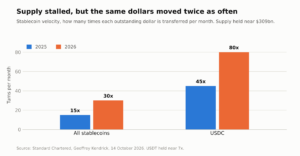
Chart 1. Usage grew without supply growing, which is why the forecast moved rather than broke. Source: Standard Chartered, Geoffrey Kendrick, 14 October 2026.
Usage tells a different story. Monthly on-chain transfer value hit a record $19trn in May and has averaged just under $10trn this year, against $4trn in 2025. Velocity roughly doubled to about 30 turns a month, with USDC moving from 45 to around 80 while USDT holds near 7.
Kendrick named regulation as the single largest risk to the forecast, turning on whether other jurisdictions adopt GENIUS-style rules. Europe just answered for itself.


Comments (0)
No comments yet. Be the first to share your feedback below!
Leave a Feedback
We'd love to hear your thoughts on this article.