

 AdminCryptominds
Three switches, one date
On 1 September 2026 Russia activated Federal Law No. 282-FZ. Bitcoin, Ether and USDT became legal to trade through Bank of Russia–supervised platforms. The digital ruble went live across the country’s 12 largest banks. The central bank added 2,600 crypto wallets to a fraud blacklist. Three policies, one morning.
The law had been in the pipeline since December 2025, when the Bank of Russia proposed the underlying framework. The State Duma passed it in July. President Putin signed it on 4 August.
What retail investors can and cannot do
Retail investors without qualified-investor status face a 300,000-ruble cap — roughly $3,700 — per licensed broker per year. The Bank of Russia decides which assets those brokers can offer, giving Moscow direct control over which coins Russian investors can access through approved channels. Passing a mandatory suitability test removes the cap entirely.
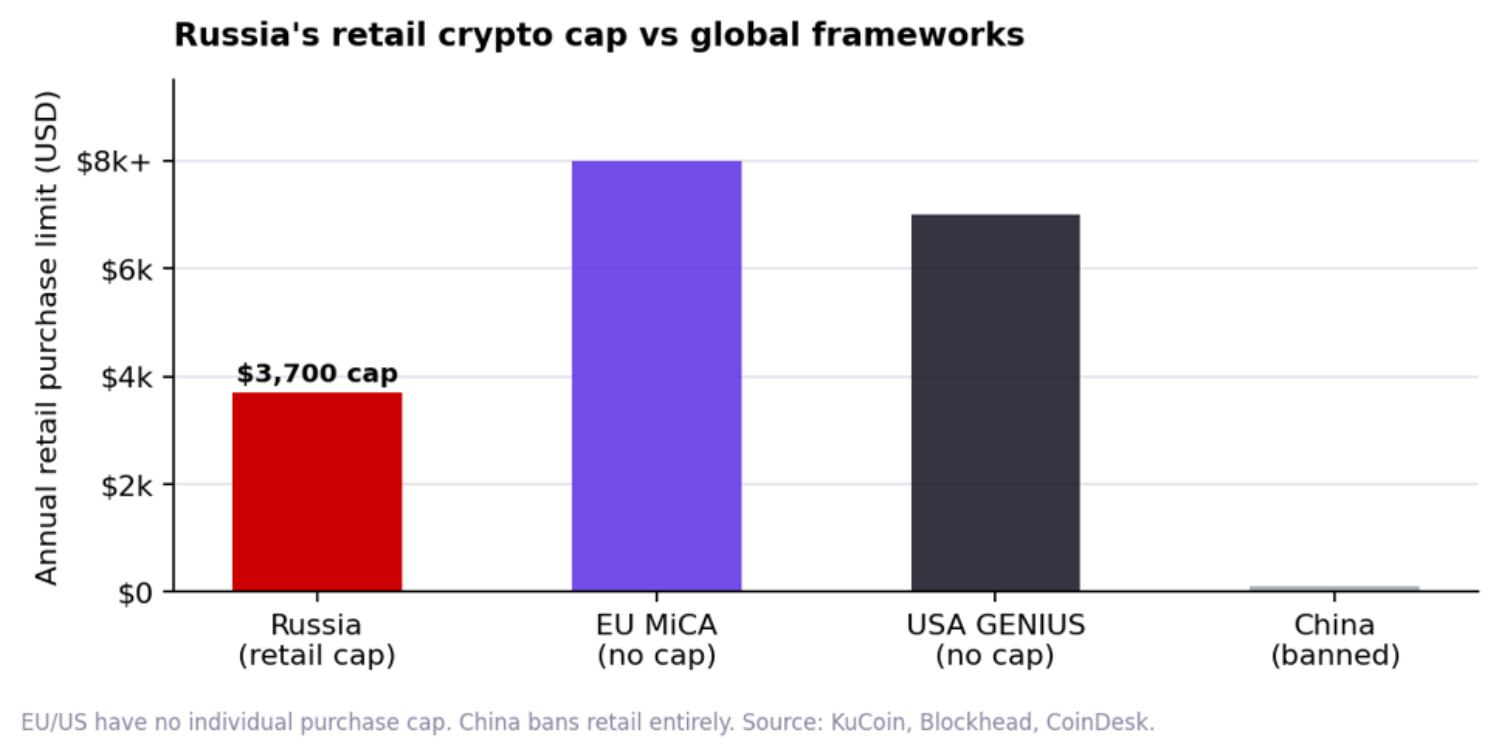
Russia’s annual retail purchase cap versus frameworks in other major jurisdictions.
What has not changed: domestic crypto payments for goods and services remain banned. Advertising that implies otherwise is also prohibited. Russian residents can transfer purchases abroad through regulated intermediaries, and they can hold crypto wallets at foreign banks.
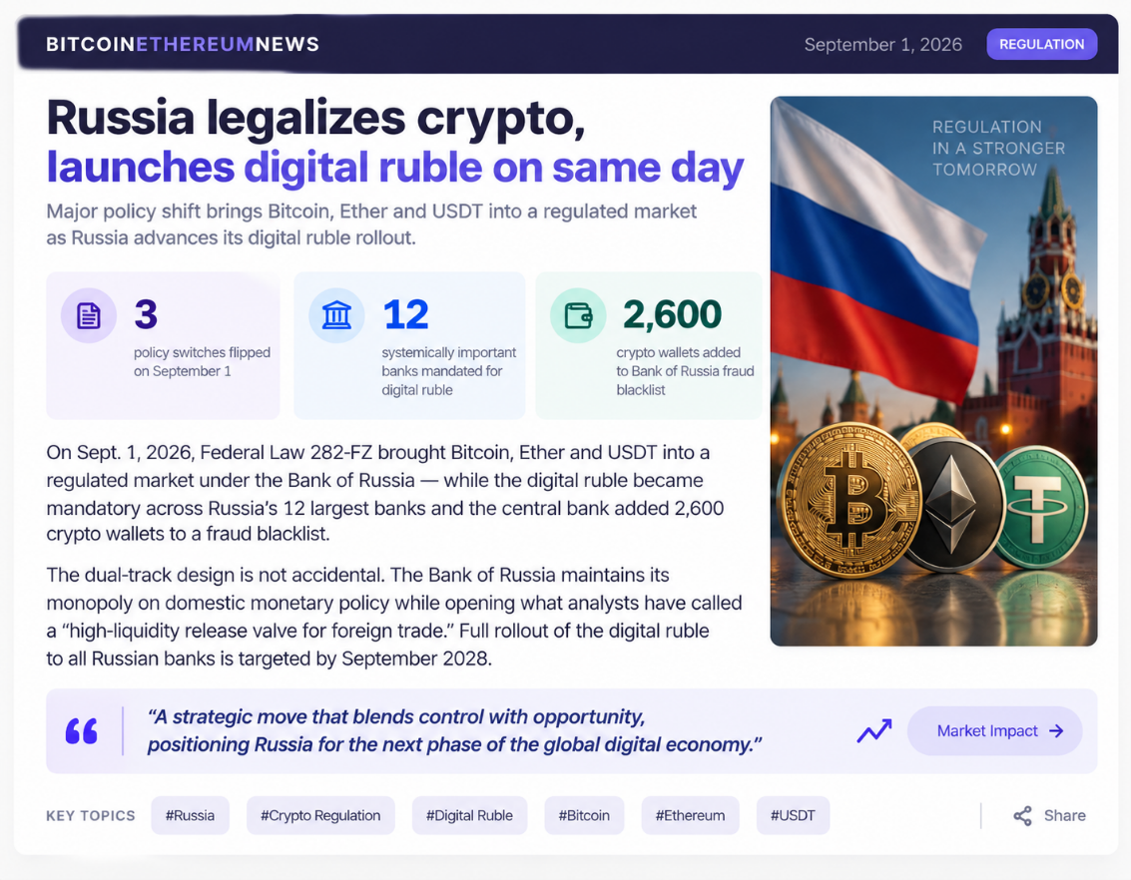
BitcoinEthereumNews, 1 September 2026 — Three switches flipped simultaneously
The sanctions angle
The provision with the largest global implications is the trade carve-out. Starting 1 September, Russian businesses involved in foreign economic activity may legally accept cryptocurrency for goods, works or services in international trade. For a country navigating Western sanctions, this creates a state-sanctioned channel for cross-border settlement that previously existed only in grey zones.
Western compliance teams at exchanges and brokers operating in Europe and the US are already reviewing whether counterparty rules must be updated to account for newly legalised Russian flows.
The road to July 2027
Today’s activation covers core trading and custody provisions. Existing participants may continue operating during a transition period provided they apply for registration. Full licensing — exchanges, brokers, custodians, depositories — must be completed by 1 July 2027. Sberbank projects roughly $46bn in first-year regulated turnover.
The digital ruble adds a parallel layer. Its mandatory adoption at 12 systemically important banks targets full coverage of all Russian banks by September 2028, putting Russia on a timeline to run both a state digital currency and a licensed private crypto market simultaneously.
Sources
- CoinGape, 1 September 2026
- com News, 1 September 2026
- CryptoTimes, 1 September 2026
- CoinDesk, 21 July 2026
- KuCoin, 21 July 2026
- Bitcoin Foundation, 22 July 2026
- BitcoinEthereumNews, 1 September 2026


Comments (0)
No comments yet. Be the first to share your feedback below!
Leave a Feedback
We'd love to hear your thoughts on this article.